|





MV anecdotes
 Marvel Superheroes
 Secrets of Strixhaven
 Teenage Mutant Ninja Turtles
 Lorwyn Eclipsed
 Avatar: the Last Airbender
 Spider-Man / Omenpaths
 Edge of Eternities
| 1116 anecdotes trouvées |   |
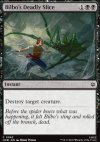
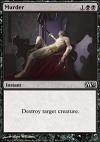
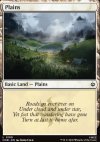
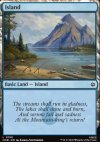
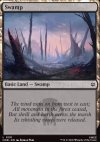
Les cinq cartes Plains, Island, Swamp, Mountain et Forest, de l'édition The Hobbit, forment un cycle de terrains de base dont les textes d'ambiance reprennent des vers de poèmes qu'on peut lire dans le roman du Hobbit, respectivement : Roads go ever, ever on, The King beneath the mountains, The wind was on the withered heath, Far over the misty mountains cold et Sing all ye joyful!.
Source 1 (Plains - Island - Mountain) - Source 2 (Swamp) - Source 3 (Forest)
Source 1 (Plains - Island - Mountain) - Source 2 (Swamp) - Source 3 (Forest)
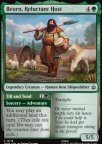
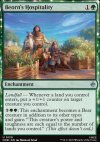
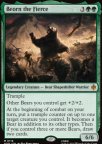
Les cartes Beorn, Reluctant Host, Beorn's Hospitality et Beorn the Fierce forment un cycle vertical (cartes d'une même couleur mais avec une rareté différente) de l'édition The Hobbit. Chacune représente Beorn et son évolution au fil de l'histoire.
Les cartes Little Bear, Large Bear, Ordinary Bear, Gigantic Big Bear et Dancing from Dark to Dawn font référence aux paroles de Gandalf lors du passage où Beorn est introduit dans l'histoire, qui évoquent une danse d'ours la nuit. Ses paroles sont reprises dans les textes d'ambiance des cartes Dancing from Dark to Dawn et Ordinary Bear.
Source 1 (capacité de Beorn à se transformer en ours)
Les cartes Little Bear, Large Bear, Ordinary Bear, Gigantic Big Bear et Dancing from Dark to Dawn font référence aux paroles de Gandalf lors du passage où Beorn est introduit dans l'histoire, qui évoquent une danse d'ours la nuit. Ses paroles sont reprises dans les textes d'ambiance des cartes Dancing from Dark to Dawn et Ordinary Bear.
Source 1 (capacité de Beorn à se transformer en ours)
Source 2 a écrit :
Of course, when you think about dancing bears the imagination is immediately drawn to Beorn in The Hobbit:
Later on Gandalf explained where he had gone in the morning:
Citation :
"If you must know more, his name is Beorn. He is very strong, and he is a skin-changer."
[...]
"He changes his skin; sometimes he is a huge black bear, [...]"
[...]
There was a growling sound outside, and a noise as of some great animal scuffling at the door. Bilbo wondered what it was, and whether it could be Beorn in enchanted shape, and if he would come in as a bear [...]
[...]
"He changes his skin; sometimes he is a huge black bear, [...]"
[...]
There was a growling sound outside, and a noise as of some great animal scuffling at the door. Bilbo wondered what it was, and whether it could be Beorn in enchanted shape, and if he would come in as a bear [...]
Later on Gandalf explained where he had gone in the morning:
Citation :
"I have been picking out bear-tracks," he said at last. "There must have been a regular bears' meeting outside here last night. I soon saw that Beorn could not have made them all: there were far too many of them, and they were of various sizes too. I should say there were little bears, large bears, ordinary bears, and gigantic big bears, all dancing outside from dark to nearly dawn. They came from almost every direction, except from the west over the river, from the Mountains. In that direction only one set of footprints led-none coming, only ones going away from here [...]"
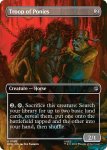
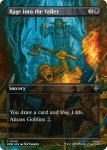
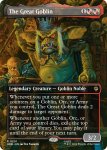
Les six cartes Troop of Ponies, Rage into the Valley, The Great Goblin, Thorin Oakenshield, Gandalf, Spark Starter et Glamdring, Foe-hammer, de l'édition The Hobbit et illustrées par Ted Nasmith, forment une seule image, représentant la scène "Fight with the Great Goblin".
Source (Scene Cards - "The 6-card Fight with the Great Goblin by Ted Nasmith scene highlights the bravery and might of Gandalf the Grey.")
Source (Scene Cards - "The 6-card Fight with the Great Goblin by Ted Nasmith scene highlights the bravery and might of Gandalf the Grey.")
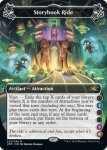

Sur l'illustration de la carte Storybook Ride, on peut voir des statues de Syr Ginger, the Meal Ender et de son compagnon (voir cette anecdote) de part et d'autre de la porte. L'attraction est donc probablement centrée autour du Plan d'Eldraine.
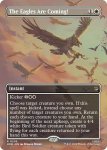
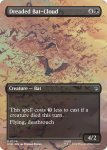
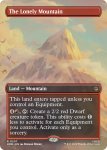
Les neuf cartes The Eagles Are Coming!, Dreaded Bat-Cloud, The Lonely Mountain, Chief Warg's Company, Thorin's Last Stand, Bard's Company, Bolg's Company, Dáin's Company et Thranduil's Company, de l'édition The Hobbit et illustrées par Denman Rooke, forment une seule image, représentant la scène "The Five Armies Clash!".
Source (Scene Cards - "The 9-card The Five Armies Clash! scene by Denman Rooke depicts the famous clash at The Lonely Mountain.")
Source (Scene Cards - "The 9-card The Five Armies Clash! scene by Denman Rooke depicts the famous clash at The Lonely Mountain.")
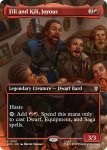
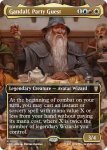
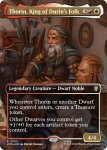
Les six cartes Fíli and Kíli, Joyous, Gandalf, Party Guest, Thorin, King of Durin's Folk, Bilbo, Fellow Conspirator, Bag End Banquet et Ori, Plate Stacker, de l'édition The Hobbit Commander Decks et illustrées par Dmitry Burmak, forment une seule image, représentant la scène "Crack the Plates".
Source (Scene Cards - "There are also two Magic: The Gathering | The Hobbit Scene Boxes: one depicting a party that has gotten slightly out of hand [...]")
Source (Scene Cards - "There are also two Magic: The Gathering | The Hobbit Scene Boxes: one depicting a party that has gotten slightly out of hand [...]")
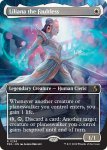

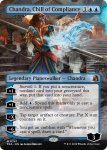
Les illustrations des versions Borderless Echoed Pairs des cartes Liliana the Faultless, Liliana the Repentant, Chandra, Chill of Compliance, Chandra, Torch of Defiance, Garruk, Veiled Butcher, Garruk, Curse Breaker, Ajani Unrelenting, Ajani Resolute, [planeswalker  (temp)] et [planeswalker
  (temp)], de l'édition Reality Fracture et illustrées par Aleksi Briclot, forment un panorama pour chacun des diptyques de planeswalkers (ou ex-planeswalkers) (voir cette anecdote).
(temp)] et [planeswalker (temp)], de l'édition Reality Fracture et illustrées par Aleksi Briclot, forment un panorama pour chacun des diptyques de planeswalkers (ou ex-planeswalkers) (voir cette anecdote).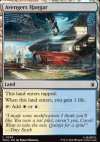
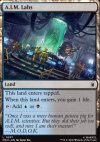
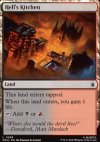
Les dix cartes Avengers Hangar, A.I.M. Labs, Hell's Kitchen, Los Diablos Missile Base, Birnin Zana Plaza, Fisk Tower, Stark Industries, Subterranean Cavern, Asgardian Citadel et Pym Technologies, de l'édition Marvel Super Heroes, forment un cycle de terrains.
Ils sont des réimpressions fonctionnelles des terrains du cycle paru dans l'édition Khans of Tarkir (voir cette anecdote).
Ils sont des réimpressions fonctionnelles des terrains du cycle paru dans l'édition Khans of Tarkir (voir cette anecdote).
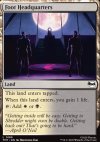
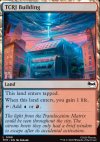
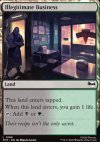
Les cinq cartes Foot Headquarters, TCRI Building, Illegitimate Business, Dimension X et Mutant Town, de l'édition Teenage Mutant Ninja Turtles, forment un cycle de terrains.
Ils sont des réimpressions fonctionnelles des cinq derniers terrains du cycle paru dans l'édition Khans of Tarkir (voir cette anecdote).
Ils sont des réimpressions fonctionnelles des cinq derniers terrains du cycle paru dans l'édition Khans of Tarkir (voir cette anecdote).
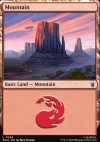
La carte Mountain, de l'édition Marvel Super Heroes et illustrée par Pace Wilder, représente la plus célèbre butte-témoin du site naturel américain Monument Valley, situé dans une réserve Navajo (hors du réseau des parcs nationaux).
Ce cadre est largement utilisé dans les films de genre Western, s'étendant même jusqu'aux fun cards Magic : Monument Valley (custom card).
Ce cadre est largement utilisé dans les films de genre Western, s'étendant même jusqu'aux fun cards Magic : Monument Valley (custom card).
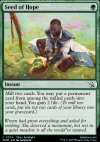
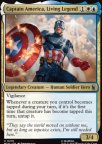
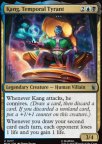
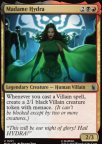
Les dix cartes Captain America, Living Legend, Kang, Temporal Tyrant, Madame Hydra, Hulk, Gamma Goliath, Black Panther, Vanguard, Black Widow, Double Agent, Iron Man, Master of Machines, Killmonger, Scourge of Wakanda, Thor Odinson et Ant-Man, Colony Commander, ainsi que les dix cartes Spider-Woman, Secret Agent, Ghost, Spectral Saboteur, Bullseye, Death Dealer, Abomination, Terrifying Titan, Spider-Man, To the Rescue, U.S.Agent, John Walker, Speedball, New Warrior, Titania, Rugged Rumbler, War Machine, Legacy of Iron et Beast, Erudite Aerialist, de l'édition Marvel Super Heroes, forment un cycle de créatures légendaires bicolores peu communes soutenant chacune un archétype de formats limités.
Source 1 (Magic: The Gathering | Marvel Super Heroes Draft Archetypes - "Each draft archetype has its own multicolor uncommon cards. These cards prominently signal the goals of each archetype.") - Source 2 ("Draft, as an example, had a big influence on the uncommon gold cards that model Draft archetypes")
Source 1 (Magic: The Gathering | Marvel Super Heroes Draft Archetypes - "Each draft archetype has its own multicolor uncommon cards. These cards prominently signal the goals of each archetype.") - Source 2 ("Draft, as an example, had a big influence on the uncommon gold cards that model Draft archetypes")

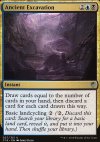
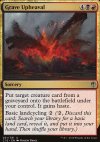
Les cinq cartes Migratory Route, Ancient Excavation, Grave Upheaval, Treacherous Terrain et Sylvan Reclamation, de l'édition Commander 2016, forment un cycle de sorts avec la capacité Recyclage de terrain de base pour un coût de deux manas génériques.

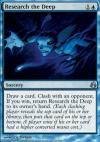
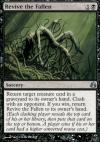
Les cinq cartes Redeem the Lost, Research the Deep, Revive the Fallen, Release the Ants et Recross the Paths, de l'édition Morningtide, forment un cycle.
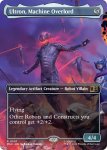
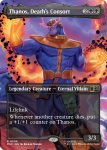
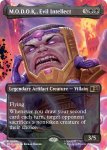
Les six cartes Ultron, Machine Overlord, Thanos, Death's Consort, M.O.D.O.K., Evil Intellect, Absorbing Man and Titania, Abomination, Irradiated Brute et Loki, God of Lies, de l'édition Marvel Super Heroes Commander Decks et illustrées par Kieran Yanner, forment une seule image.
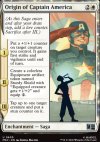
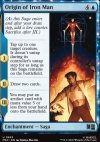
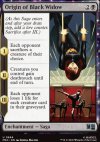
Les cinq cartes Origin of Captain America, Origin of Iron Man, Origin of Black Widow, Origin of Thor et Origin of the Hulk, de l'édition Marvel Super Heroes Commander Decks et illustrées par Serena Malyon, forment un cycle.
Les cartes Origin of the Avengers, Origin of Spider-Man et Origin of the Hidden Ones s'apparentent à ce cycle.
Les cartes Origin of the Avengers, Origin of Spider-Man et Origin of the Hidden Ones s'apparentent à ce cycle.
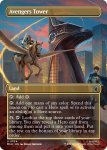
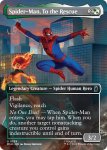
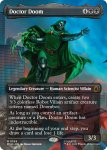
Les dix-huit cartes Avengers Tower, Spider-Man, To the Rescue, Doctor Doom, Cosmic Cube, Thor, God of Thunder, Mjölnir, Hammer of Thor, Blazing Crescendo, Avengers Assemble!, Captain Marvel, Earth's Protector, Loki, God of Mischief, Ultron, Artificial Malevolence, Photon, Living Light, Black Panther, Hope Enduring, Black Widow, Super Spy, Take Up the Shield, Earth's Mightiest Heroes, The Invincible Iron Man et Epic Fight, de l'édition Marvel Super Heroes et illustrées par Johan Grenier, forment une seule image.
Source (Borderless Scene Cards - "Johan Grenier illustrated a massive 18-card scene depicting various Super Heroes battling for control of a cosmic cube.")
Source (Borderless Scene Cards - "Johan Grenier illustrated a massive 18-card scene depicting various Super Heroes battling for control of a cosmic cube.")
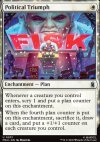
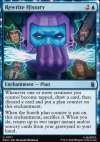
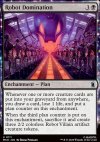
Les cinq cartes Political Triumph, Rewrite History, Robot Domination, Death to Our Enemies et Claim the Kingdom, de l'édition Marvel Super Heroes, forment un cycle.
Les cartes Construct a Cosmic Cube et Doom Reigns Supreme partagent la même mécanique et s'apparentent à ce cycle.
Ce cycle est inspiré d'autres cycles parus dans les éditions Murders at Karlov Manor et Theros (voir cette anecdote et celle-ci).
Source ("The addition to make you feel more like a Villain in games ended up being an enchantment subtype. Inspired by the Ordeals in Theros and Cases in Murders at Karlov Manor, Set Design came up with Plan, an enchantment subtype.")
Les cartes Construct a Cosmic Cube et Doom Reigns Supreme partagent la même mécanique et s'apparentent à ce cycle.
Ce cycle est inspiré d'autres cycles parus dans les éditions Murders at Karlov Manor et Theros (voir cette anecdote et celle-ci).
Source ("The addition to make you feel more like a Villain in games ended up being an enchantment subtype. Inspired by the Ordeals in Theros and Cases in Murders at Karlov Manor, Set Design came up with Plan, an enchantment subtype.")
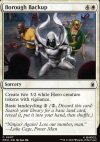
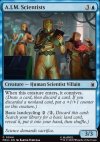
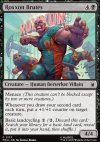
Les cinq cartes Borough Backup, A.I.M. Scientists, Roxxon Brutes, Kree Sentinel et Savage Land Dinosaur, de l'édition Marvel Super Heroes, ainsi que les cinq cartes Fall to Earth, Dismissive Denial, Infernal Rebirth, Marvelous Melee et Colossal Collision, de l'édition Marvel Super Heroes Commander Decks, forment un cycle de sorts avec la capacité Recyclage de terrain de base pour un coût de deux manas génériques.
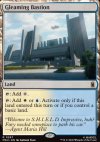
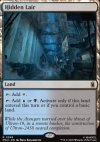
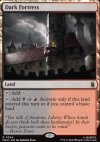
Les cinq cartes Gleaming Bastion, Hidden Lair, Dark Fortress, Training Compound et Gathering Place, de l'édition Marvel Super Heroes, forment un cycle de terrains.
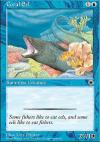
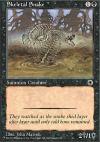
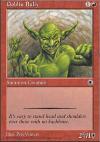
Les cartes Coral Eel, Skeletal Snake et Goblin Bully sont les premières créatures "Vanilla" (sans texte de règles) 2/1 pour deux manas éditées dans chaque couleur.
Chacune a fait l'objet de réimpressions fonctionnelles (voir respectivement cette anecdote, celle-ci et celle-là).
Il n'existe pas les créatures équivalentes dans les couleurs blanche ou verte.
Search ~ Créature + Sans texte + Valeur de mana = 2 + F/E = 2/1
Chacune a fait l'objet de réimpressions fonctionnelles (voir respectivement cette anecdote, celle-ci et celle-là).
Il n'existe pas les créatures équivalentes dans les couleurs blanche ou verte.
Search ~ Créature + Sans texte + Valeur de mana = 2 + F/E = 2/1
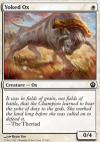
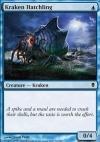
Les cartes Yoked Ox et Kraken Hatchling sont les premières créatures "Vanilla" (sans texte de règles) 0/4 pour un mana éditées dans chaque couleur.
La première a fait l'objet de réimpressions fonctionnelles (voir cette anecdote).
Il n'existe pas les créatures équivalentes dans les autres couleurs.
Search ~ Créature + Sans texte + Valeur de mana = 1 + F/E = 0/4
La première a fait l'objet de réimpressions fonctionnelles (voir cette anecdote).
Il n'existe pas les créatures équivalentes dans les autres couleurs.
Search ~ Créature + Sans texte + Valeur de mana = 1 + F/E = 0/4
| 1116 anecdotes trouvées | |